
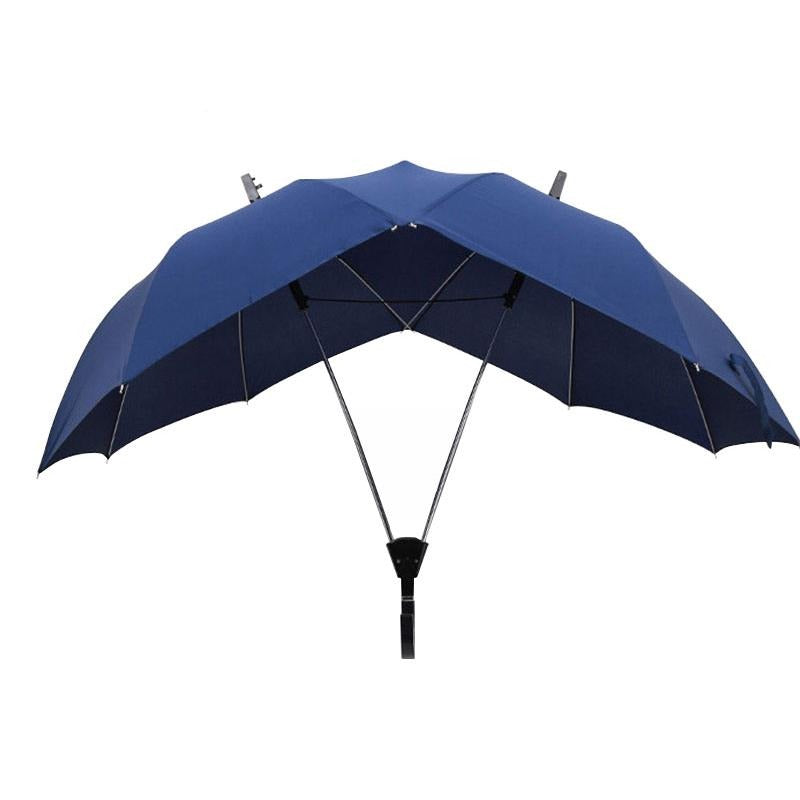
Sharing an umbrella works best when both people can walk naturally beneath it without crowding each other or blocking the route. Compare height, walking pace, bags and the width of the places you will pass. A larger canopy alone does not solve every two-person problem.
If September means walking together to a station, campus or evening activity, try the arrangement before a rainy deadline. You may find one shared umbrella convenient—or discover that two separate umbrellas better suit the journey.
Start with the route you actually walk
Think about narrow sidewalks, crowded stops, low entrances and places where people need to pass. A canopy that seems spacious in an open area can be awkward at a busy doorway.
For example, a short walk across an open courtyard is different from a route with several narrow paths and a crowded bus stop. Choose around the more difficult parts of the route, not only the first few steps outside.
Check the forecast and use judgment about conditions. Do not treat “windproof” wording as a guarantee that an umbrella is suitable in severe weather.
Compare pace and carrying needs
Two people may naturally walk at different speeds or prefer different amounts of space. Add a shoulder bag, shopping or a walking aid and the available room changes again. Neither person should have to adopt an awkward position throughout the journey simply to share a canopy.
Try holding the umbrella while standing together and walking in a clear area. Check sightlines and whether either person needs to keep leaning or reaching. If the position is uncomfortable, a different arrangement may be easier.
The Automatic Two Person Couple Umbrella is a catalog option to investigate. Its name does not establish comfortable coverage for every combination of users, bags or weather. Confirm the selected item's dimensions and operation before deciding.
Agree who handles entrances
Choose a simple routine for opening and closing away from other people. Do not operate an automatic mechanism in a crowded space or close to someone's face. Follow the umbrella's instructions rather than experimenting in the doorway.
Decide where the second person will wait while the holder closes it. That small agreement can prevent both people trying to move through a narrow entrance at the same time.
A reversible umbrella has a different folding arrangement to examine, but it still needs space for appropriate operation. Reversible does not mean drip-free in every situation or suitable for use without attention to others.
Keep a separate-plan option
If you split up after part of the journey, decide who keeps the umbrella and what the other person will use. A shared item is less convenient if one person is left without a workable return plan.
After the trip, follow the product's drying and storage instructions. Sharing also means agreeing who will make it ready for next time.
The best choice is not necessarily the biggest umbrella. It is the arrangement that suits both people and the route. If two separate umbrellas let you walk more comfortably and manage entrances more easily, there is no reason to force a shared solution.
For the related basics, read our guide to the differences between umbrella types.